
Solar power, sized from measured loads
Off-grid cameras, sensors, signs, radios and routers that keep running through the dark months, because the design started with a current meter and a winter sun table.
Five numbers every roadside solar design needs
Load in watt-hours per day
Measured per mode: sleep, capture, transmit, heater on. Duty cycle applied.
Design-point sun hours
Worst-month peak sun hours for the site latitude and panel tilt.
Autonomy days
How many days of no sun the battery must carry, typically five to twelve for critical roadside loads.
Derating
Temperature, soiling, aging, controller efficiency and depth-of-discharge limits.
Shedding plan
Which loads turn off first when the bank runs low, so the link outlives the camera.
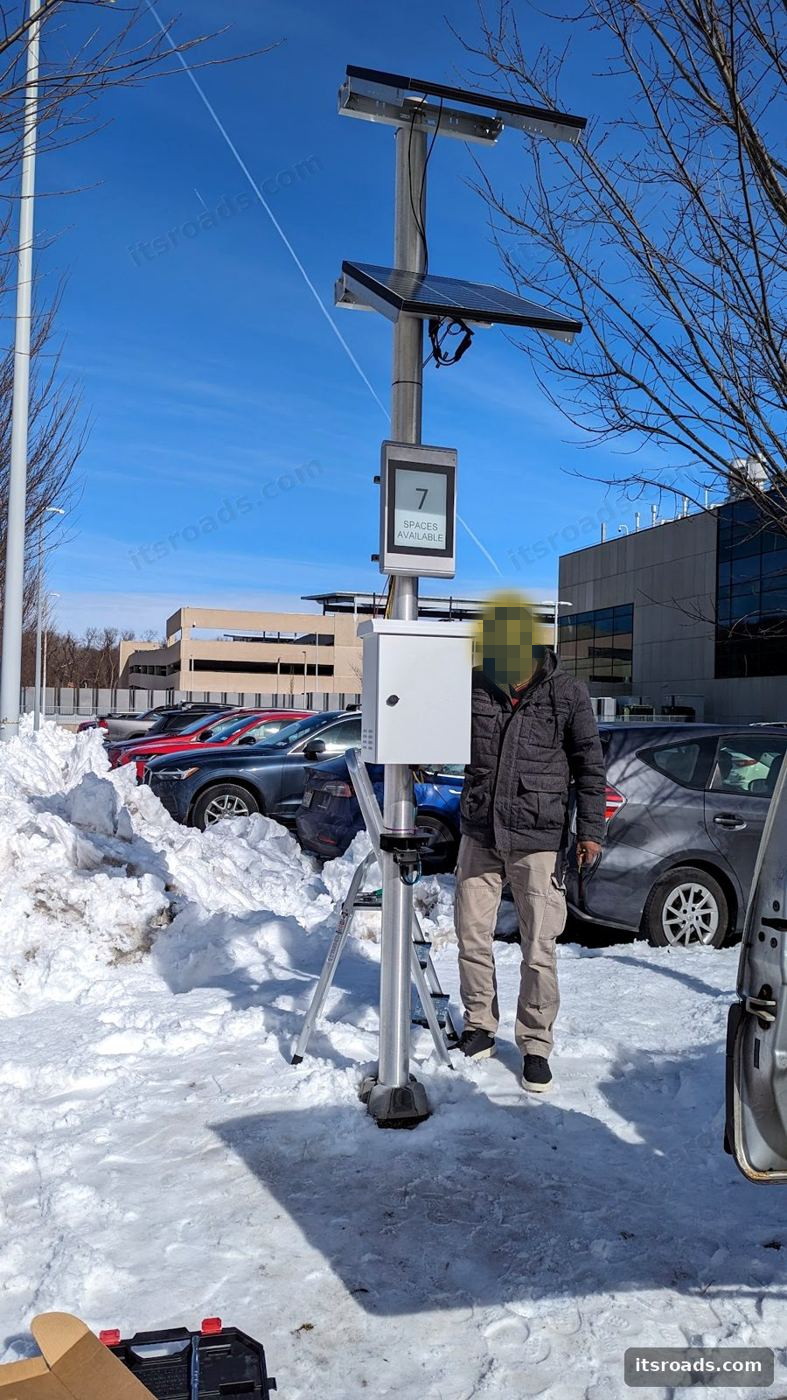
- Solar camera nodes for Streetline TPAS sites and work-zone monitoring, with multi-day measured reserve
- Solar dynamic message signs and availability sign systems
- Solar-powered mobile RSU and sensor trailers with telescoping masts
- Pole-mounted sensor packages where there is no spare circuit
- Rest-area and trailhead camera systems with cellular backhaul
- Backup power and battery sizing for cabinets on utility power, including UPS runtime calculations
Deliverables include a power budget workbook, panel and battery specification, charge-controller and wiring diagram, enclosure thermal check and a commissioning checklist. Production designs draw on utility-scale solar bid items and cost bases from state DOT projects.

Solar FAQ
How do you size a solar system for roadside equipment?
We start from a measured load, not a nameplate: current draw in each operating mode and the duty cycle. We set the design point at the site's worst-month peak sun hours, choose an autonomy target in days of no sun, derate for temperature and panel aging, and select panel wattage, battery chemistry and capacity, charge controller and enclosure to meet it with margin.
Lithium or lead-acid?
Lithium iron phosphate offers more usable capacity and cycle life but cannot be charged below freezing without heating; sealed lead-acid and gel remain practical for cold climates and agency maintenance familiarity. We specify by climate, load, maintenance plan and budget.
Can you retrofit solar to an existing cabinet or sign?
Yes. We integrate panels, batteries and controllers into existing cabinets or add a dedicated solar battery enclosure, with low-battery load shedding so communications survive longer than cameras during extended cloud.
Ready to scope it?
Send us the corridor, the site count and the problem. We will come back with an approach, not a brochure.