
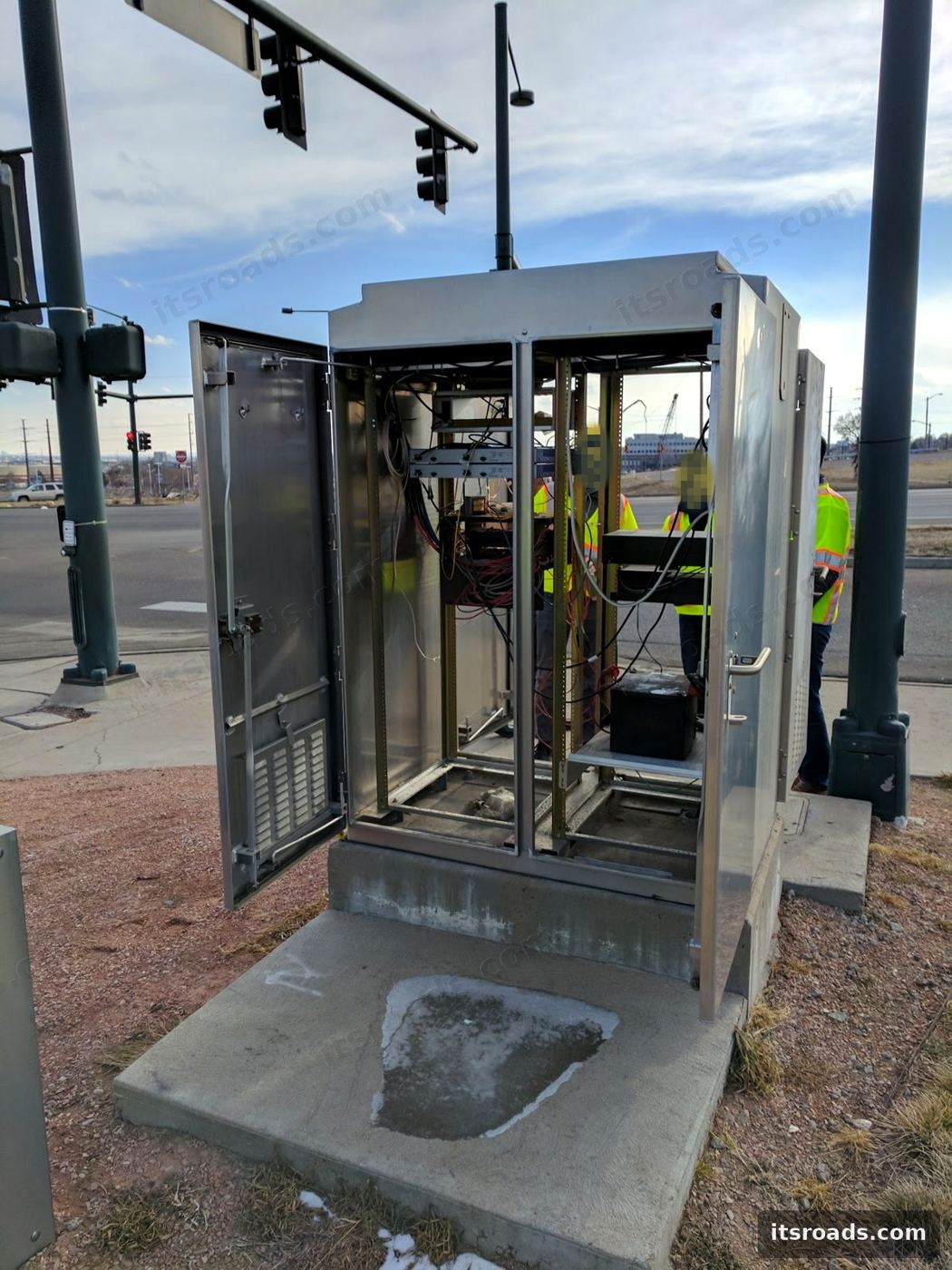
Roadside infrastructure, designed and built to a documented standard
Cabinets, smart hubs, poles, fiber and power for cameras, sensors, radios and signs. Engineered for the equipment load and the climate, bench-built and burned in before the bucket truck rolls.
From a standard cabinet design to a corridor of hung panels
Roadside electronics live a hard life: heat, cold, moisture, lightning, vibration and the occasional vehicle strike. We design enclosures and panels so that the equipment inside runs for years and a technician can service it in minutes. Each design ships with a bill of materials, power and weight calculations, wiring and network drawings, work instructions and a site acceptance test.
- Pole-mounted and ground cabinets, NEMA 3R, 4 and 4X, aluminum and stainless, with removable subpanels and DIN-rail layouts
- Camera pole electronics enclosures serving two to eight cameras per pole with managed PoE switching and fiber or 5G uplink
- Hub and communications cabinets, including walk-in enclosures with HVAC, UPS and generator provisions, and roadside micro data centers
- 48 VDC and 120 VAC power distribution, smart UPS and battery banks, breakers, surge protection on AC, PoE and antenna lines, grounding and bonding
- Fiber splice and termination, single-mode and BiDi optics, outdoor-rated Cat6A, cellular routers with static IP and VPN
- Environmental, door and tamper sensors with SNMP reporting into the agency's monitoring platform
- Camera, radar, lidar, RSU, DMS and sign mounts; conduit, pull and pole work with licensed crews; traffic control coordination
Our process
Site and load analysis
Equipment list, power and heat budget, backhaul, pole or foundation, climate and access. Site surveys with photo documentation.
Design package
Enclosure and subpanel layout, BOM with alternates, wiring and network drawings, weights, structural inputs, cut-sheet library.
Bench build and burn-in
Panels wired to NEC color conventions with ferrules and wire duct, first power-on, configuration, burn-in and a local device assembly test before shipment.
Field deployment
Hanging instructions, contractor training, installation oversight, fiber splice coordination, site acceptance test witnessed with the owner.
Operations
As-builts, O&M documentation, spares strategy and optional live monitoring so the owner sees every cabinet's health from day one.
Recent roadside builds
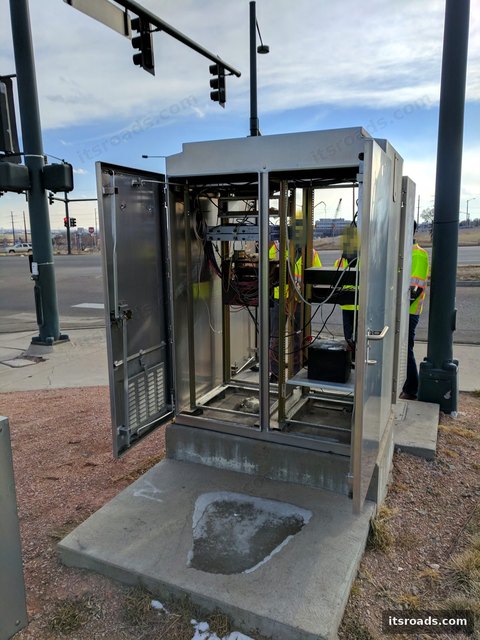
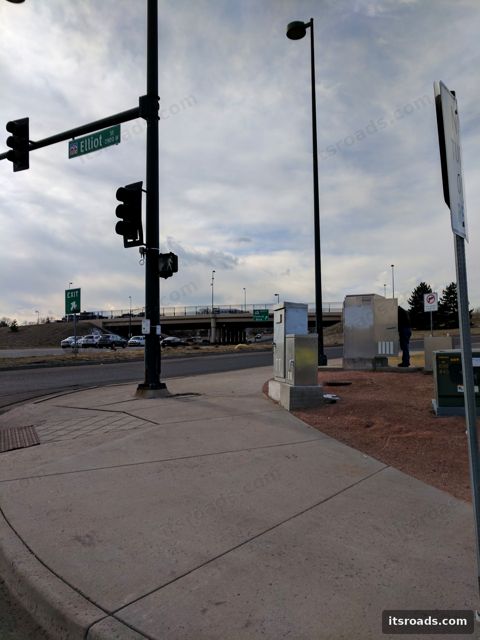
Barrier-mounted camera pole foundations on a multi-state smart corridor, stainless cabinets at downtown intersections, pole-mounted communications enclosures, gantry equipment over express lanes and the hub cabinets that tie them together. Open the photographs to scroll through the set.
Smart-corridor camera cabinet program Peña Station V2X roadside build
Roadside infrastructure FAQ
What is a roadside smart hub?
A smart hub is a pole- or ground-mounted enclosure that provides conditioned power, network switching, surge protection, environmental monitoring and remote access for the sensors, cameras, radios and signs attached to it. ITS Roads designs the hub around the equipment load, backhaul and site conditions, then builds and tests it in our lab before installation.
Which enclosure ratings do you work with?
NEMA 3R, 4 and 4X in aluminum and Type 304/316 stainless steel, and IP66, IP67 and IP68 enclosures for sealed electronics. We size for the equipment heat load and add sun shields, vents, heaters or air conditioning as the climate requires.
Do you install the cabinets yourselves?
We build, wire and test every panel in our Northern Virginia lab and manage installation with licensed electrical, bucket-truck and traffic-control partners. On DOT projects we typically work alongside the agency's installation contractor, train their crews and witness the site acceptance test.
Can you design to a DOT standard cabinet or pole detail?
Yes. Recent work includes redlines to state standard CCTV pole details, state-format site acceptance tests and designs that fit existing DOT poles and barrier-mounted foundations.
Ready to scope it?
Send us the corridor, the site count and the problem. We will come back with an approach, not a brochure.