
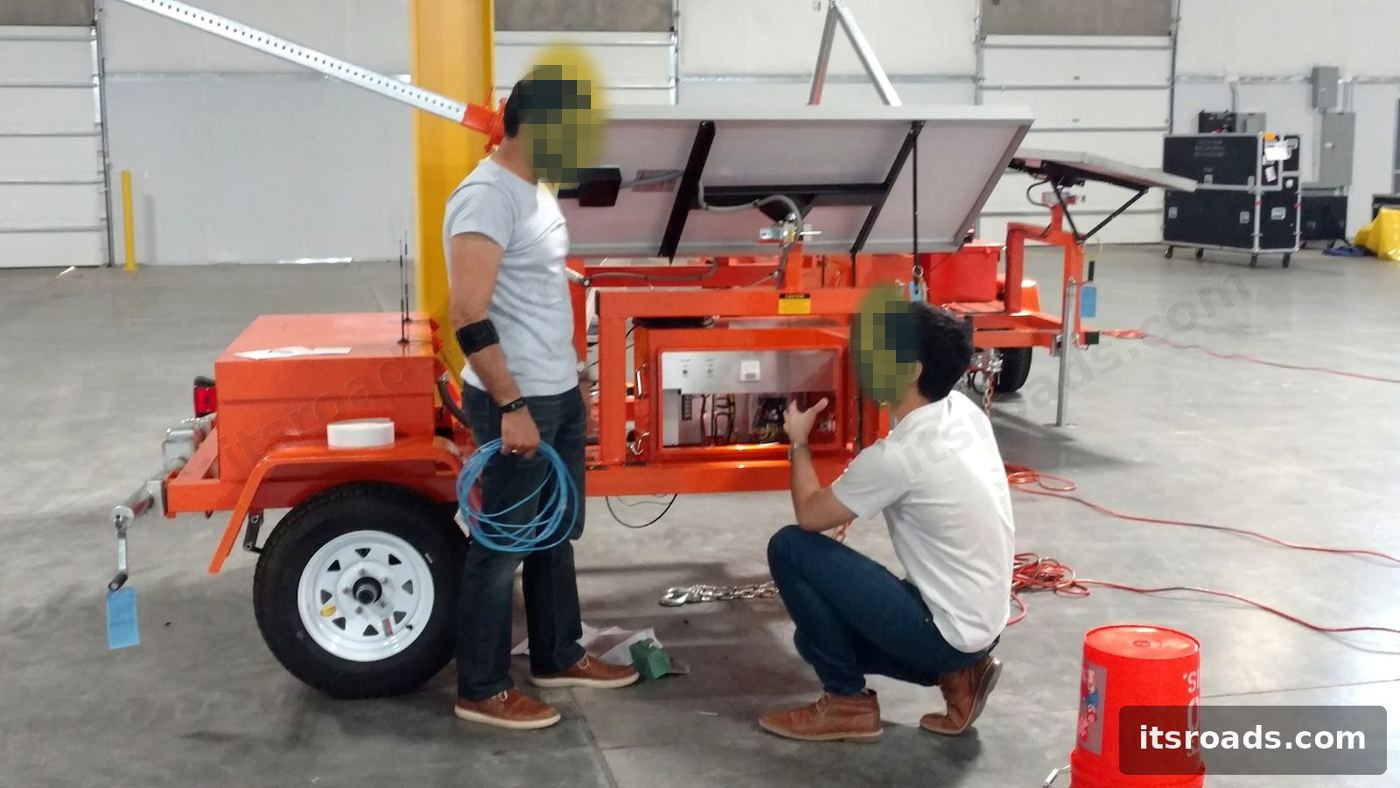
Mobile roadside systems and C-V2X trailers
Connectivity and sensing anywhere a pilot, work zone, event or evaluation needs it. Towable, solar-powered, monitored, and ready in days rather than construction seasons.
Prove the application before you pour the foundation
Agencies are under pressure to adopt connected-vehicle, video-analytics and smart-city technology while operations budgets and staff are stretched. A mobile roadside platform establishes a proving ground where staff can learn the opportunities and limits of new technology at small scale, validate data flows into existing systems and demonstrate results to policymakers before committing to a corridor build.
ITS Roads built three trailer-mounted mobile roadside units for Colorado's first connected-vehicle deployment at Peña Station, and has designed solar camera trailers and portable detection kits for pedestrian studies, Streetline's TPAS sites and work zones since.
- Telescoping mast with C-V2X or DSRC roadside unit, GNSS antenna and optional cameras, radar or lidar
- Solar array and battery bank sized to the measured load and the local winter sun, with autonomy targets for cloudy stretches
- Cellular backhaul with static IP and VPN; direct-to-cloud or into the agency's network
- Sealed electronics enclosure with PoE switch, router, DC power, surge protection and environmental sensing
- In-vehicle onboard units and instrumentation kits for test fleets
- RF coverage surveys, FCC licensing support and acceptance testing after installation
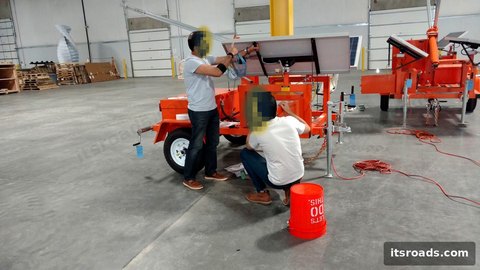
ITS Roads Connector Kits
Turnkey packages that establish the foundation for connectivity between roadside infrastructure and equipped vehicles. Each one can be scaled or customized to an agency's budget and requirements.
Flex Connect
Mobile deployment + in-vehicle unit. A single solar trailer for agencies in the planning stage. Deploy anywhere, demonstrate to stakeholders, move it to the next site. No disruption to existing operations.
Fixed Pole
Single-site deployment + in-vehicle unit. One permanent site that models backend connectivity and validates data structures and flows before a wider roll-out.
Living Lab
Five-site deployment + in-vehicle units. A scaled geographic footprint for operational field tests under normal traffic, where staff, contractors and vendors can work together on real applications.
Custom
Any mix of fixed and mobile sites. Work-zone sensing, pedestrian detection, Streetline TPAS sites, camera trailers for construction monitoring, or a full corridor roll-out.
Consultation to acceptance in about three months
Needs and budget
Applications, sites, existing transportation and network infrastructure, funding.
Site requirements
Power, connectivity, line of sight, environmentals; site survey and selection; FCC licenses where needed.
Configure and bench test
Kit built, configured and burned in at our Northern Virginia lab with the agency's backend connections exercised.
Deploy and accept
Installation, wireless coverage survey after installation, acceptance test and staff training.
Advantages: low-cost, high-performance solutions; lessons learned from national deployments; industry-leading test tools; engineering best practices; streamlined implementation; support for FCC registration and licensing; compliance with USDOT, SAE, IEEE and NTCIP standards.
Mobile systems FAQ
What is a C-V2X trailer?
A towable, solar-powered platform with a telescoping mast that carries a cellular vehicle-to-everything roadside unit, GNSS, cellular backhaul and optionally cameras or radar. It lets an agency broadcast and receive V2X messages, or run a sensor pilot, at any location without a pole, conduit or utility power.
How quickly can a mobile system be deployed?
A configured trailer or portable kit can be on site in days. Our standard Connector Kit process runs about three months from initial consultation to deployment and acceptance testing, including FCC licensing support where required.
Can the trailer feed data to our traffic management center?
Yes. Trailers backhaul over cellular with static IP and VPN, and we integrate with the agency's ATMS, data warehouse or cloud platform. Every unit is monitored from our NOC so the TMC sees link, power and device health.
Ready to scope it?
Send us the corridor, the site count and the problem. We will come back with an approach, not a brochure.