
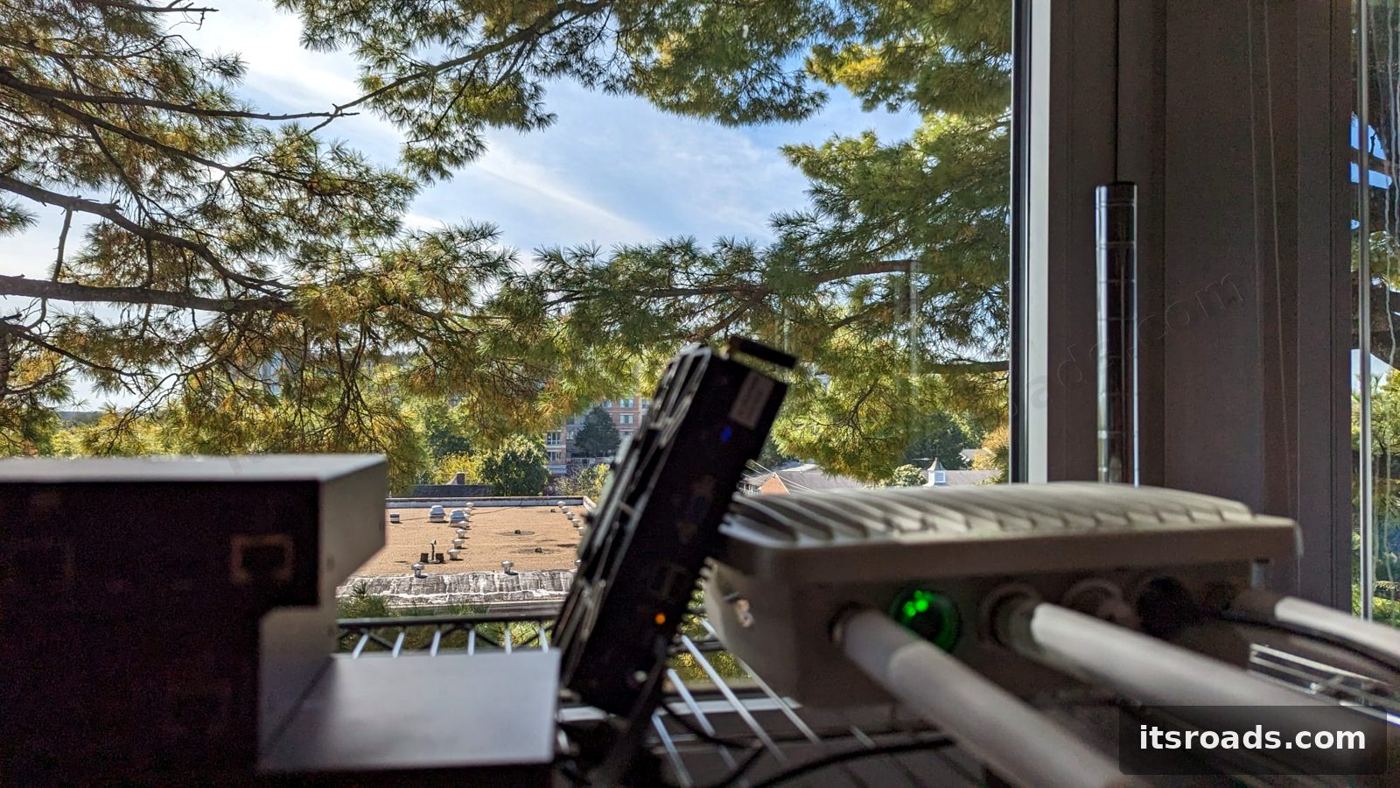
Roadside units tested to the standard, managed remotely and monitored in production
Vendor accountability for agencies expanding V2X deployments: independent test data, standards traceability, remote management of DSRC and C-V2X roadside units, and a real picture of how the test bed performs, from device health to the messages on the air.
From specification to a statewide dashboard
- Architecture and design of connected-vehicle environments, backend integration with the traffic management system, security plans
- RSU and onboard unit selection, provisioning guides, interoperability testing between vendors
- NTCIP 1218 requirements traceability matrices and SNMPv3 test cases covering radios, GNSS, store-and-repeat, immediate-forward, security, logs and performance objects
- Bench test cases, field test cases and custom test plans; GNSS simulation, packet capture and message parsing
- Remote RSU management: configuration, firmware, stored messages, SCMS enrollment and certificate state across vendors
- Over-the-air message capture and decoding: SPaT, MAP, TIM, BSM, PSM, SDSM and work-zone broadcasts, with rate and content analysis
- Monitoring templates, dashboards, trigger dependencies, O&M responsibility matrices and monthly performance reports
- FCC licensing and RF surveys for roadside sites; living-lab and trailer deployments; staff capacity building and technology transfer
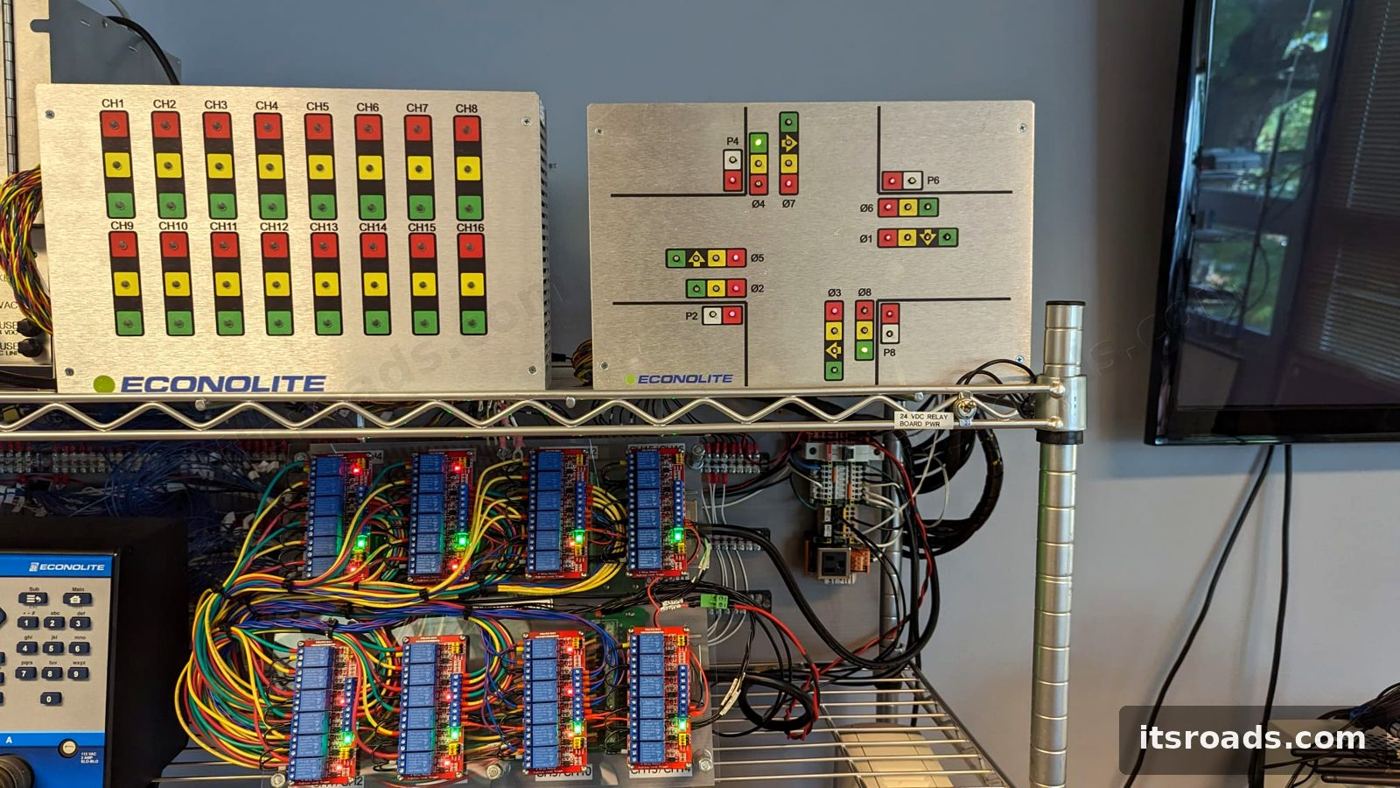

Device health is the start. Message truth is the point.
A vendor's connected-vehicle manager tells you an RSU is online and lets you push a configuration. Agencies also need to know whether every unit, from every vendor, is reachable through its cellular gateway, holding a GNSS fix, running approved firmware, within temperature, carrying a valid security certificate, and actually broadcasting the right messages at the right rate to vehicles. ITS Roads builds that picture in a platform the agency owns, and reports on it monthly.
-
-
-
- ReachablePacket lossUptimeVendor and firmwareGNSS status and positionInternal temperatureRadio enabledGeneral statusSCMS enrollmentCertificate expiry
-
- SPaT 10 HzMAP 1 HzTIMWork zone / RSMBSM receivedPSMSDSMSignature valid
-
-
- Uptime and availabilityProblem events by typeGNSS issue trendsCritical device listMonth-over-month comparison
-
Colorado DOT: standards testing, monitoring and management for a statewide fleet
Colorado operates one of the largest connected-vehicle roadside networks in the country, with units along I-25, I-70, C-470 and E-470 and the Denver metro corridors. As the program expanded, CDOT needed an external source of test data, a dedicated focus on integrated performance and hands-on guidance for its technical staff.
Since 2023 ITS Roads has served as technical lead for RSU standards testing and network monitoring through the state's Covendis marketplace. We published a test-case document of roughly 180 NTCIP 1218 Section 5 cases with a full traceability matrix, bench-tested units from two manufacturers in our Northern Virginia lab, and built the vendor-neutral SNMPv3 and ICMP monitoring templates that now watch 512 roadside units and 436 network devices.
- Vendor-neutral template set: roughly twenty items and twenty triggers per RSU, more than 10,000 live items and 11,000 triggers in production
- Automated RSU-to-network-device dependencies so a cellular outage raises one alarm instead of hundreds
- Inventory, discovery rules and host groups by region and vendor; development-to-production migration; 6.0 to 7.x upgrade plan
- Automated monthly reporting: uptime and availability, problem events, GNSS trends, device health ranking and month-over-month trend workbooks
- O&M responsibility matrix, trigger improvement proposals and change requests reviewed with agency IT
Connected-vehicle work since the first federal pilots
FHWA Turner-Fairbank
Design and operation of the Saxton Transportation Operations Laboratory, co-authorship of the fourth-generation DSRC RSU specification, Safety Pilot qualified products list, SCMS field operational testing, the first CARMA automated-vehicle fleet, and V2I Hub reference-implementation testing on multiple RSU platforms.
Colorado RoadX and Peña Station
Concept of operations and backend architecture for the I-70 Mountain Corridor pilot, and the design and build of Colorado's first connected-vehicle roadside deployment: six cabinets, three mobile RSU trailers, a fiber ring and SNMP monitoring.
Denver Living Lab and transit safety
Six-intersection downtown connected-vehicle living lab with a 25-vehicle onboard-unit fleet, and independent evaluation of a V2I pedestrian-safety retrofit on a city bus network for the Federal Transit Administration.
Connected-vehicle FAQ
What RSU standards do you test against?
NTCIP 1218 for roadside unit management objects over SNMPv3, SAE J2735 and J3224 message sets, IEEE 1609.x, the USDOT CTI 4001 and 4501 RSU specification guides, and the OmniAir certification matrix. Our principal co-authored the fourth-generation USDOT DSRC RSU specification.
How is this different from a connected-vehicle manager?
A CV manager configures RSUs and shows whether they are online. ITS Roads adds vendor-neutral NTCIP 1218 monitoring in a platform the agency owns, dependency logic across the network devices in front of each RSU, SCMS certificate tracking, over-the-air message capture and decoding, and monthly performance reporting. We manage the fleet remotely and we prove what it is broadcasting.
Can you monitor RSUs from different vendors in one platform?
Yes. We build vendor-neutral monitoring templates against the NTCIP 1218 object set, so roadside units from different manufacturers report status, GNSS, firmware, temperature and security-certificate state into one dashboard with one set of triggers.
Where is testing performed?
On the instrumented RSU test bench at our Northern Virginia lab, where agencies ship units for bench testing and vendor provisioning, and in the field on the agency's corridors with secure VPN access.
Ready to scope it?
Send us the corridor, the site count and the problem. We will come back with an approach, not a brochure.